Redesigning a clinical decision support tool
Overview
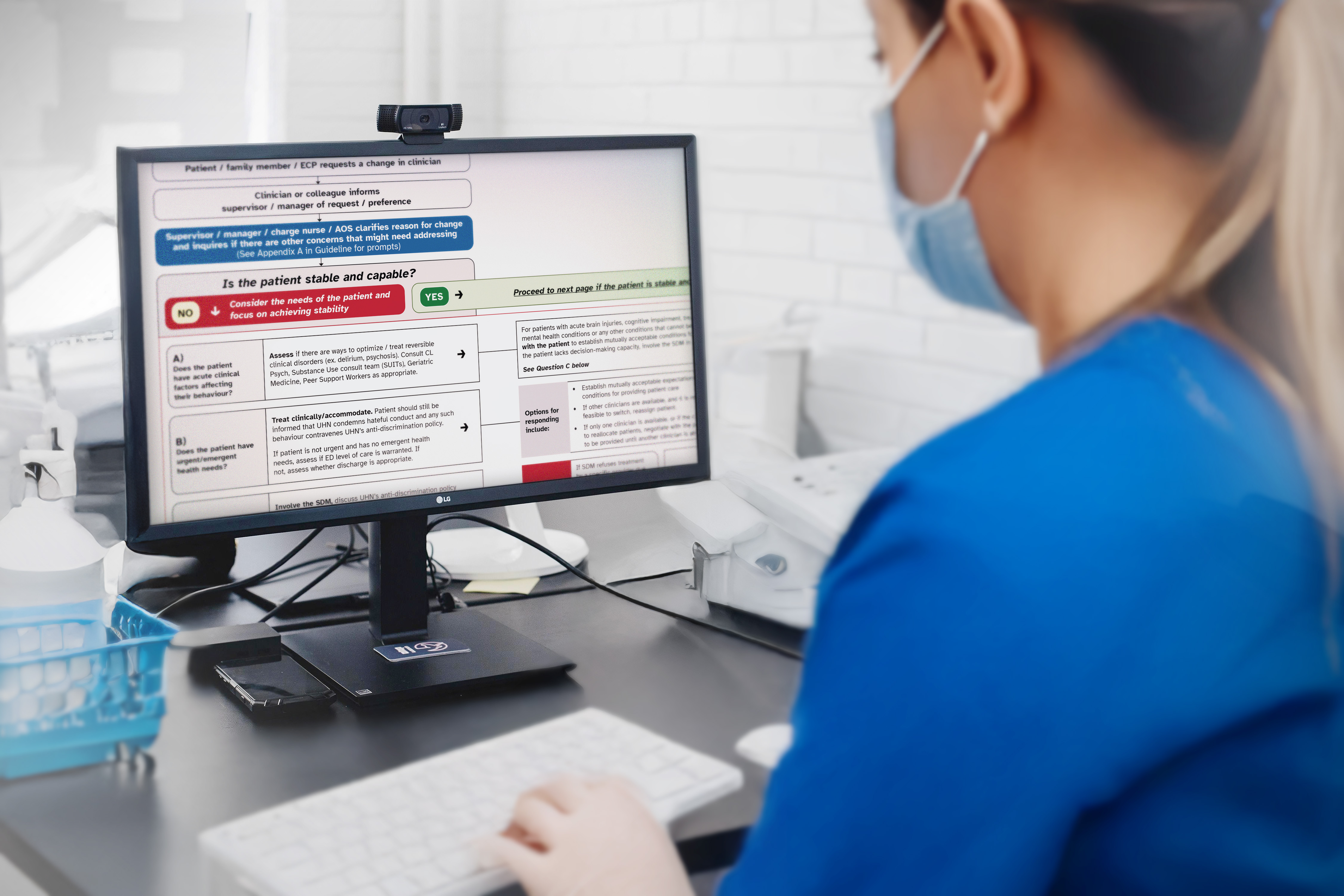
Hospitals across Canada have struggled with an increase in conflict between patients and healthcare providers. UHN Ethics asked KITE Studio to produce a Bioethics Algorithm booklet and digital PDF to guide specific healthcare workers on addressing concerns of patient bias — prejudices or stereotypes that patients may hold that affect their interactions with healthcare providers and quality of care.
The Ask
UHN Ethics wanted to turn a large, complex flowchart outlining the steps healthcare workers should take to resolve patient biases into an easy-to-follow booklet or digital copy. The end product had to preserve the scientific integrity of the original information while providing a real-time option for health care providers to use during patient interactions. It also needed to include content that must be edited to ensure the healthcare provider received accurate information and to reduce reading challenges, especially for those with vision disabilities.
Exploration
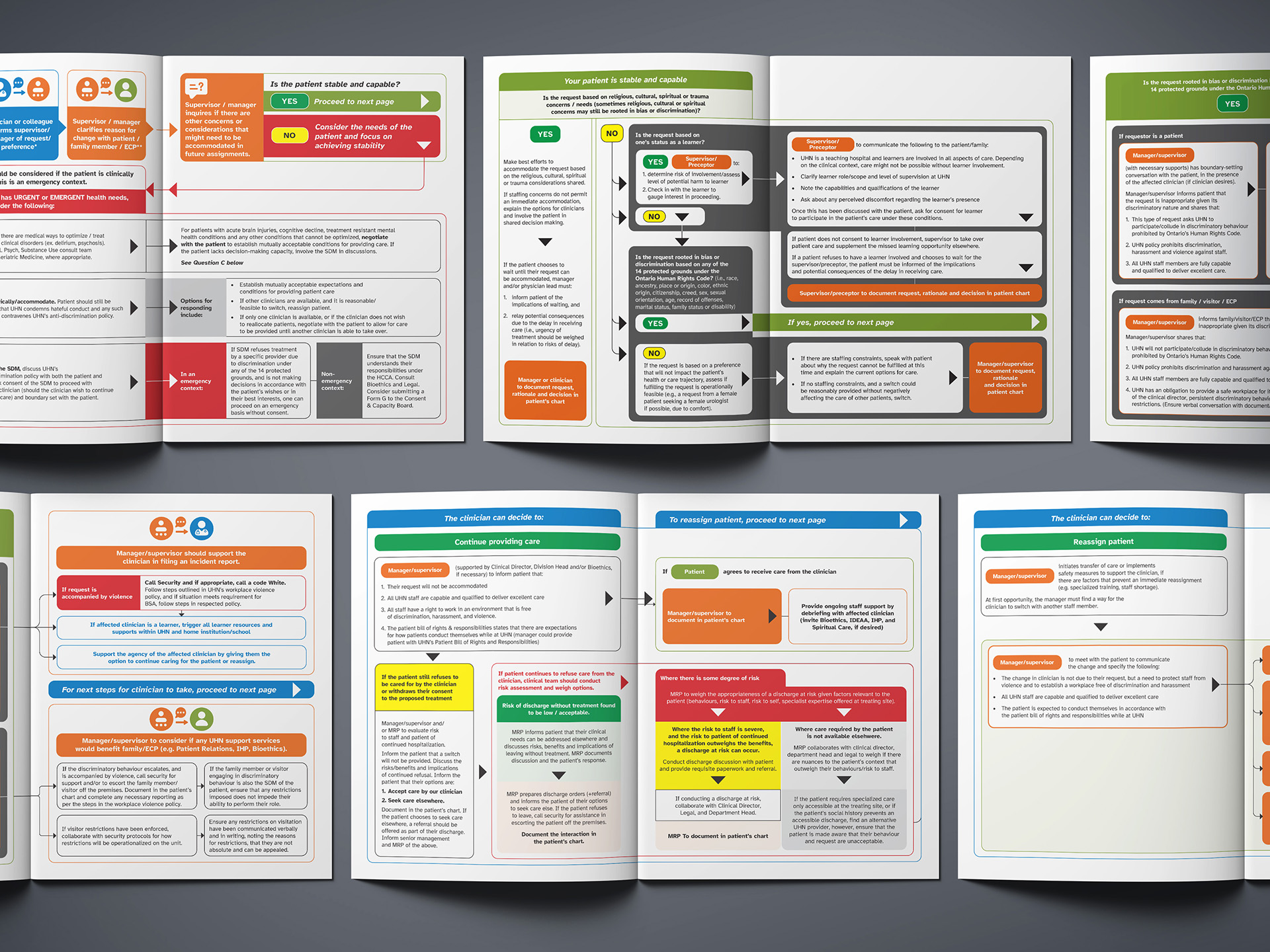
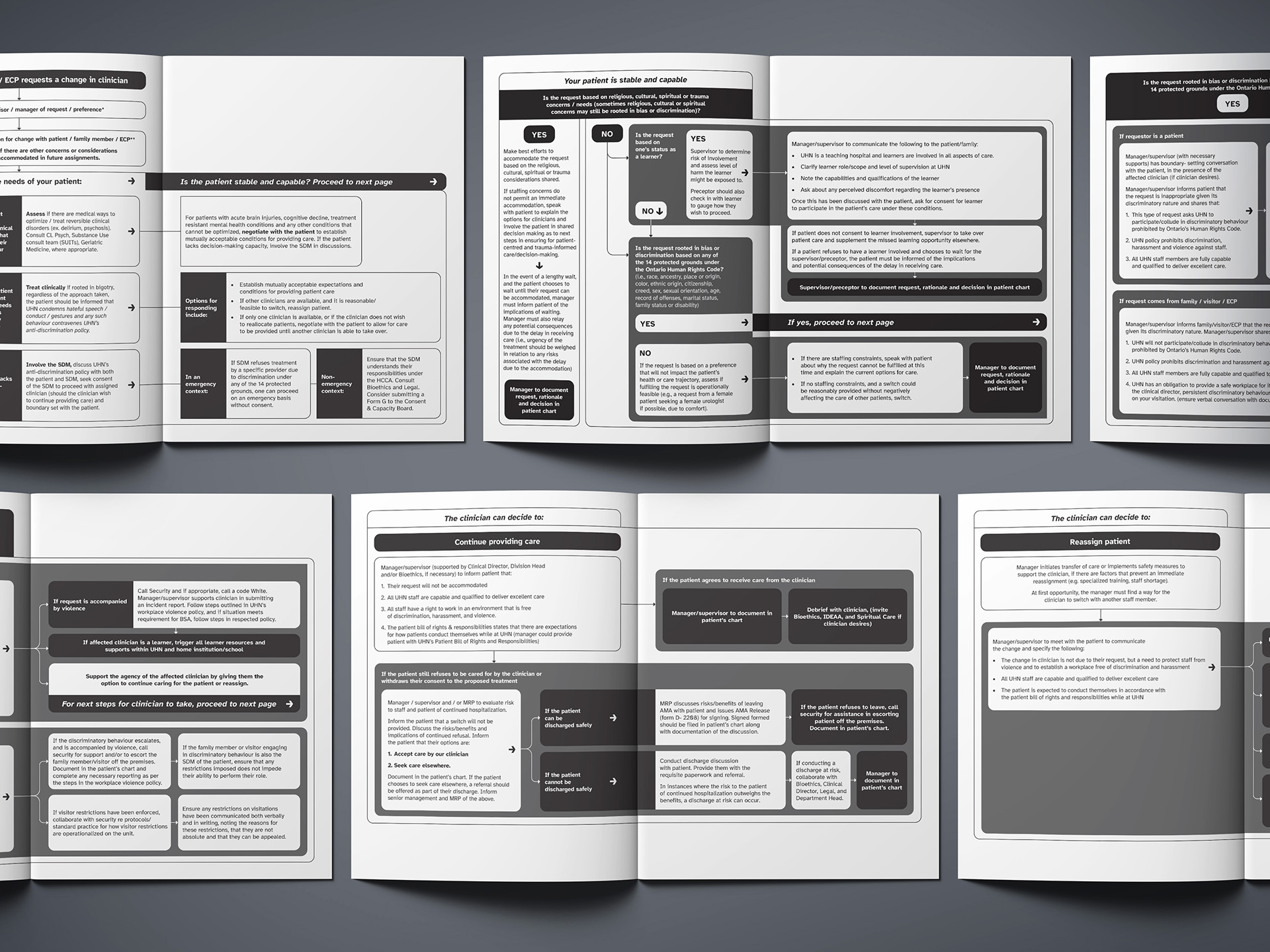
We began by categorizing the large flowchart into page spreads and creating visual markers, arrows, decision points, and contextual text boxes to organize the information. Then, we divided the content into five page spreads and created a colour scheme for decision points.
To improve readability, we selected a font optimized for legibility and AODA compliance. Through more than three iterations and client feedback, we refined how the information was translated and the graphical elements used in the document.
Deliverables & Impact
The Bioethics Algorithm is now available as an interactive PDF, allowing healthcare workers to use it in real‑time during complex situations. Each page spread includes context-specific information to guide the user through questions and decision points, which can be clicked on for more information. We designed the PDF so that it works in a hard copy as well, and can be printed without losing clarity.
The tool is available to more than 20,000 UHN staff through the corporate intranet, and there’s growing interest from other educators, and health care institutions who want to use it in their own training. It was also presented to a network of academic health care institutions to educate them on how bias can be best addressed.